

COMMUNICATION SKILLS
LEARN THROUGH YOUR COURSE AND FORTIFY ALL YOUR WEAKNESS WITH KNOWLEDGE
Click here to access Unit one Content..
Topic One: Introduction to communication skills
Topic Objectives
By end of this topic, you should be able to:-
· Define of communication skills
· Explain modes of communication
· Describe patterns of communication
· Use Listening Skills
· Understand reading and writing skills
Click here to access Unit one Content..
Topic One: Introduction to communication skills
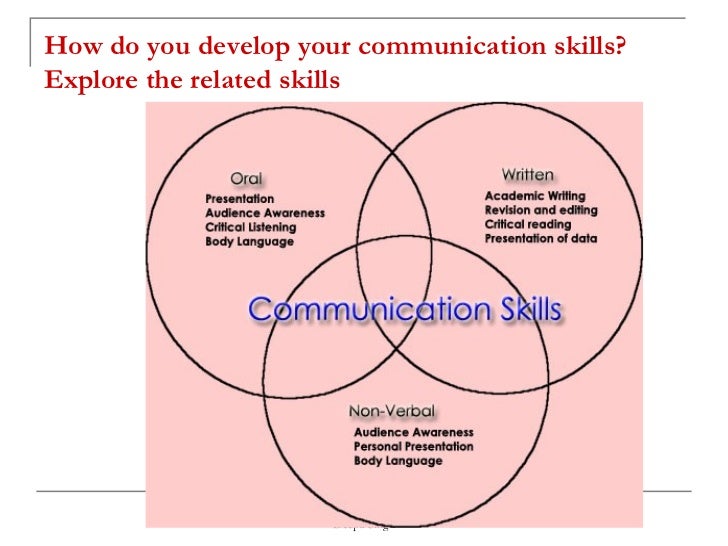
The word communication has a long and rich history. Since the beginning of time, the need to communicate has been a part of man’s inherent being. The survival of mankind is due to their ability to communicate. Human race has communicated though different techniques and methods; the use of symbols, gestures, sounds, drawings and sign languages were some methods of communication used by the early man. Archaeological evidence shows that the early men were good artists and have been effectively communicating through the visual sense, the transmission, reception, or reproduction of sound and the study of body movements. Through the year’s communication has advanced with the development of technology. Hence it is clear that communication has assumed an immense importance in our time. (Littlejohn, 2002)
Definition
• Communication is the transmission of a message from a receiver to a sender.
• The sharing of meaningful information between two or more people with a goal of the receiver understanding the meaning
• An activity of conveying information through the exchange of thoughts, messages or information, as by speech, visual, signals writing or behaviour
• Any activity by which one person gives to or receives from another person information about that person’s needs, desires, perceptions, knowledge or effective states.
Communication may be intentional or unintentional, may involve conventional or unconventional signals may take linguistic or non linguistic, forms and may occur through spoken or other modes.
The Purpose of Communication
• To get others to think and act the way we want them to think and act.
• To inform others
• To ask and answer questions
• To listen to others
Elements of Communication- Source – Message -Encoding-Channel – Receiver – Decoding – Feedback
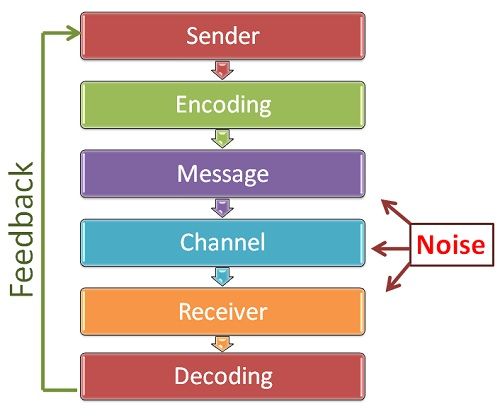
Communication may be defined as a process concerning exchange of facts or ideas between persons holding different positions in an organisation to achieve mutual harmony. The communication process is dynamic in nature rather than a static phenomenon.
Communication process as such must be considered a continuous and dynamic inter-action, both affecting and being affected by many variables.
(1) Sender:
The person who intends to convey the message with the intention of passing information and ideas to others is known as sender or communicator.
(2) Message:
This is the subject matter of the communication. This may be an opinion, attitude, feelings, views, orders, or suggestions.
The message is what is being transmitted from sender to receiver and has three interpretations: -
a. The message meant to be conveyed
b. What the communicator did say and
c. What the receiver thought he heard
An effective message should have 5 Cs
Clear
Concise
Complete
Convincing
capable of being carried out
A message should be
Timely
Meaningful
Applicable to the situation
Delivered at the right place
Use appropriate code
Content treatment
(3) Encoding:
Since the subject matter of communication is theoretical and intangible, its further passing requires use of certain symbols such as words, actions or pictures etc. Conversion of subject matter into these symbols is the process of encoding.
(4) Communication Channel:
The person who is interested in communicating has to choose the channel for sending the required information, ideas etc. This information is transmitted to the receiver through certain channels which may be either formal or informal.
(5) Receiver:
Receiver is the person who receives the message or for whom the message is meant for. It is the receiver who tries to understand the message in the best possible manner in achieving the desired objectives.
(6) Decoding:
The person who receives the message or symbol from the communicator tries to convert the same in such a way so that he may extract its meaning to his complete understanding.
(7) Feedback:
Feedback is the process of ensuring that the receiver has received the message and understood in the same sense as sender meant it.
Communication process requires a sender, a message, and a recipient/Receiver although the receiver need not be aware the sender’s intent to communicate at the time of communication. Thus, communication can occur across vast distances in time and space
Three other elements associated with the process of communication are: Entropy, Redundancy and Noise.
Entropy is a measure of the amount of uncertainty in the message/content.
Redundancy either knowingly or unknowingly enters the communication process. If deliberate, it serves the purpose of reiterating the message; otherwise repetitiveness is undesired element.
Noise is actually anything irrelevant, unwarranted, undesired and hence, a disturbance/interference to effective transmission. Noise is anything that disrupts or interferes with the effective communication process.
Noise can be physical, psychological or semantic and can disturb the communication process at any point; noise may be associated with any element in the system:
- Physical noise or external noise are environmental distractions such as startling sounds, appearances of things, music playing somewhere else, and someone talking really loudly near you, etc;
- Physiological noise are biological influences that distract one from effectively communicating; these could include sweaty palms, pounding heart, butterfly in the stomach, induced by speech anxiety, or feeling sick, exhausted at work, the ringing noise in your ear, being really hungry, and if you have a runny nose or a cough.
- Psychological noise are the preconceived bias and assumptions such as thinking someone who speaks like a valley girl is dumb, or someone from a foreign country can’t speak English well so you speak loudly and slowly to them. o Semantic noise is word choices that are confusing and may have the effect of distorting the meaning.
Human communication may be broadly classified as:
- Intrapersonal
- Interpersonal o Group Dynamics
- Public/Mass
- Organization
- Cross cultural
Any of the above, depending on the choice of the medium, may be classified further as verbal, non-verbal/bodily and graphic communication. Whatever may be the type human communication is associated with subjectivity.
Methods of Communication
A connected team and a connected organization in today’s world is the only way we can achieve greater things. Connections and relations are built with exchange of thoughts and information. Communication serves as a valuable mechanism in building these connections and engagement between people.
Communication is a very important skill and art. There are four different ways we communicate with others. No matter what form of communication we choose, it is important to have the right intention to connect with the other person.
1. Written
It refers to printed or recorded materials such as plans, contracts, memos, minutes of the meeting, requirement analysis document, design documents risk registers and other related written materials. It is used to provide well-thought and well-planned details, thus easily to be reviewed than verbal communication because everything that has been written cannot be altered right away. More so, it can be used for future reference.
Written communication can be time consuming, but is extremely essential for formal scenarios which require approvals and having legal implications as well. Emails have ushered in a revolution in making written communication very fast and thus have become a preferred mechanism for sharing detailed information in fraction of a second.
2. Oral/Verbal
It involves the exchange of message or information by using words verbally through face to face or telephone conversations. It is the most common type of conversation as it paves way to get feedback right after receiving the message. It is known to be spontaneous as well. In verbal communication, the ability to listen and think carefully before speaking is critical.
A person must be careful of the words or expressions to be said. Any word that has been spoken cannot be taken back, so it is important to formulate expressions or sentences carefully.
3. Non-Verbal
Non-verbal communication is sending information without the use of words. It is mostly through one’s body language, gestures, eye-contacts, appearance, pitch and tone of one’s voice etc. one can communicate huge amount of feelings and emotions. They say, “It is important to understand what has not been said explicitly”. Non-verbal communication includes, body-language, para language (pitch and tone of voice), appearance etc. Research has shown that nonverbal cues or body language,along with facial expressions, tone of voice,and body stance account for almost 55% of all the communication that takes place.
4. Visual Communication
“A picture is worth a thousand words”. Visual aids such as animation, colour, illustration, graphs & charts, drawing, signs and logos immensely enhance written communication. Visual communication is also used in the right balance for making information sharing more effective and efficient.
Click here to access Unit one Content..
Topic One: Introduction to communication skills [Cont'd]

Communication process requires a sender, a message, and a recipient/Receiver although the receiver need not be aware the sender’s intent to communicate at the time of communication. Thus, communication can occur across vast distances in time and space Three other elements associated with the process of communication are: Entropy, Redundancy and Noise. Entropy is a measure of the amount of uncertainty in the message/content. Redundancy either knowingly or unknowingly enters the communication process. If deliberate, it serves the purpose of reiterating the message; otherwise repetitiveness is undesired element. Noise is actually anything irrelevant, unwarranted, undesired and hence, a disturbance/interference to effective transmission. Noise is anything that disrupts or interferes with the effective communication process. Noise can be physical, psychological or semantic and can disturb the communication process at any point; noise may be associated with any element in the system: - Physical noise or external noise are environmental distractions such as startling sounds, appearances of things, music playing somewhere else, and someone talking really loudly near you, etc; - Physiological noise are biological influences that distract one from effectively communicating; these could include sweaty palms, pounding heart, butterfly in the stomach, induced by speech anxiety, or feeling sick, exhausted at work, the ringing noise in your ear, being really hungry, and if you have a runny nose or a cough. - Psychological noise are the preconceived bias and assumptions such as thinking someone who speaks like a valley girl is dumb, or someone from a foreign country can’t speak English well so you speak loudly and slowly to them. o Semantic noise is word choices that are confusing and may have the effect of distorting the meaning. Human communication may be broadly classified as: - Intrapersonal - Interpersonal o Group Dynamics - Public/Mass - Organization - Cross cultural Any of the above, depending on the choice of the medium, may be classified further as verbal, non-verbal/bodily and graphic communication. Whatever may be the type human communication is associated with subjectivity. A connected team and a connected organization in today’s world is the only way we can achieve greater things. Connections and relations are built with exchange of thoughts and information. Communication serves as a valuable mechanism in building these connections and engagement between people. Communication is a very important skill and art. There are four different ways we communicate with others. No matter what form of communication we choose, it is important to have the right intention to connect with the other person. It refers to printed or recorded materials such as plans, contracts, memos, minutes of the meeting, requirement analysis document, design documents risk registers and other related written materials. It is used to provide well-thought and well-planned details, thus easily to be reviewed than verbal communication because everything that has been written cannot be altered right away. More so, it can be used for future reference. Written communication can be time consuming, but is extremely essential for formal scenarios which require approvals and having legal implications as well. Emails have ushered in a revolution in making written communication very fast and thus have become a preferred mechanism for sharing detailed information in fraction of a second. It involves the exchange of message or information by using words verbally through face to face or telephone conversations. It is the most common type of conversation as it paves way to get feedback right after receiving the message. It is known to be spontaneous as well. In verbal communication, the ability to listen and think carefully before speaking is critical. A person must be careful of the words or expressions to be said. Any word that has been spoken cannot be taken back, so it is important to formulate expressions or sentences carefully. Non-verbal communication is sending information without the use of words. It is mostly through one’s body language, gestures, eye-contacts, appearance, pitch and tone of one’s voice etc. one can communicate huge amount of feelings and emotions. They say, “It is important to understand what has not been said explicitly”. Non-verbal communication includes, body-language, para language (pitch and tone of voice), appearance etc. Research has shown that nonverbal cues or body language,along with facial expressions, tone of voice,and body stance account for almost 55% of all the communication that takes place. “A picture is worth a thousand words”. Visual aids such as animation, colour, illustration, graphs & charts, drawing, signs and logos immensely enhance written communication. Visual communication is also used in the right balance for making information sharing more effective and efficient. Methods of Communication
1. Written
2. Oral/Verbal
3. Non-Verbal
4. Visual Communication
Healthcare Communication
Identify the elements of communication in this illustration
Methods of Communication
Sight
Sound/hearing
Action
Smell
Mannerism
Taste
Touch
Click here to access Unit one Content..
Topic One: Summary
Communication is an art. The above are different methods of exchanging information to communicate. All the methods are used for specific expected outcomes and purpose of communication.
in topic one We have covered the :-- Definition of communication
- Elements of communications
- Methods of communications
Click here to access Unit one Content..
Topic One: Further Reading
- Chandler, Daniel. Transmission Model of Communication. [Web Page], 10 December 2013. 2.
- Emory A Griffin, A first look at communication theory. 3rd edition, New York: McGraw-Hill, 1997. 3.
- Griffin, E., & Langan, E. (2006). A First Look at Communication Theory, [web page], 3 November, 2013.
Click here to access Unit one Content..
Topic Two: Models in communication

Topic objective
By the end of this unit the learner should be able to:
· Discuss Shannon’s model of communication
· Describe derivative models of communication
· Discuss the SMCR models of communication
· Discuss the Bidirectional model;
- An Interactive model and
-Transactional model.
Outline One way and two-way communicationA communication model is chiefly a process in which information is enclosed in form of a package and is channeled then imparted by the sender to the receiver through a medium. When the receiver gets the information, he or she decodes the message and gives the sender a certain feedback. Models of communication refer to the conceptual model used to explain the human communication process.
In this section, you will learn about three models of communication:
· Linear model
· Interactive model
· Transactional model
Linear Model - The linear model views communication as a one-way or linear process in which the speaker speaks and the listener listens. Laswell’s (1948) model was based on five questions -WHO, WHAT, What CHANNEL, To WHOM, and with WHAT EFFECT, which effectively describe how communication works.
The Shannon–Weaver model, developed in 1949, is referred to as the 'mother of all models' and is widely accepted as a main initial model for communication studies.
Shannon and Weaver’s (1949) model includes noise or interference that distorts understanding between the speaker and the listener. It is a one-way model to communicate with others. It consists of the sender encoding a message and channeling it to the receiver in the presence of noise. Its major drawback is that it assumes that there is a clear-cut beginning and end to communication. It also displays no feedback from the receiver; e.g. Mass communication - television, radio, newspapers. It is any method in which there is no possible way for feedback (even nonverbally). Letters, text messages, and e- mail can be responded to. A lecture would not fit in this model because listeners can still give feedback nonverbally.
The initial model consisted of four primary parts: Sender, Message, Channel, and receiver. The sender was the part of a telephone, a person speaks into, the channel was the telephone itself, and the receiver was the part of the phone through which one can hear the sender on the other end of the line. Shannon and Weaver recognized that static or background sounds may interfere with a telephone conversation; they referred to this as noise. Certain types of background sounds can also indicate the absence of a signal.
Shannon and Weaver's original model contains five elements: information source, transmitter, channel, receiver, and destination. The information source is where the information is stored. In order to send the information, the message is encoded into signals, so it can travel to its destination. After the message is encoded, it goes through the channel which the signals are adapted for the transmission. In addition, the channel carries any noise or interference that might lead to the signal receiving different information from the source. After the channel, the message arrives in the receiver and is reconstructed (decoded) from the signal before finally arriving at its destination.
In a simple model, often referred to as the transmission model or standard view of communication, information or content (e.g. a message in natural language) is sent in some form (as spoken language) from a transmitter/emissary/sender/encoder to a receiver/decoder. According to this common communication-related conception, communication is viewed as a means of sending and receiving information. The strengths of this model are its simplicity, generality, and quantifiability. The mathematicians Claude Shannon and Warren Weaver structured this model on the basis of the following elements:
· An information source, which produces a message.
· A transmitter, which encodes the message into signals.
· A channel, for which signals are adapted for transmission.
· A receiver, which reconstructs the encoded message from a sequence of received signals and decodes it.
· An information destination, which processes the message.
Shannon and Weaver argued that this concept entails three levels of problems for communication:
1. The technical problem: how accurately can the message be transmitted?
2. The semantic problem: how precisely is the meaning 'conveyed'?
3. The effectiveness problem: how effectively does the received meaning affect behavior?
Interactive Model The main flaw in the linear model is that it depicts communication as a one-way process where speakers only speak and never listen. It also implies that listeners listen and never speak or send messages.
Schramm (1955) in Wood (2009) came out with an interactive model that saw the receiver or listener providing feedback to the sender or speaker. The speaker or sender of the message also listens to the feedback given by the receiver or listener. Both the speaker and the listener take turns to speak and listen to each other. Feedback is given either verbally or nonverbally, or in both ways. This model also indicates that the speaker and listener communicate better if they have common fields of experience, or fields which overlap
Click here to access Unit Two Content..
UNIT 2: MODELS OF COMMUNICATION,
Objectives
At the end of this topic , the learner shall be able to:
· Discuss Shannon’s model of communication
· Describe derivative models of communication
· Discuss the SMCR models of communication
· Discuss the Bidirectional model;
- An Interactive model and
-Transactional model.
· Outline One way and two-way communication
Click here to access Unit Two Content..
UNIT 2: MODELS of COMMUNICATION
A communication model is chiefly a process in which information is enclosed in form of a package and is channeled then imparted by the sender to the receiver through a medium. When the receiver gets the information, he or she decodes the message and gives the sender a certain feedback. Models of communication refer to the conceptual model used to explain the human communication process.
In this section, you will learn about 6 models of communication:
a) Shannon’s model of communication
b) Derivative model
c) Bidirectional model;
i) An Interactive model and
ii) Transactional model.
d) SMCR Model
e) One way and two way communicationClick here to access Unit Two Content..
Topic 1: Shannon’s model
• It explains how and why communication takes place
• It uses 8 discrete elements of communication;
1. Source,
2. Message,
3. Transmitter
4. Tignal,
5. Toise source,
6. Received signal,
7. Receiver,
8. Destination
1. An information Source
An information source presumably a person who creates a message
2. The message
The message which is both sent by the information source and received by the destination
3. The transmitter
The transmitter of which the first is the mouth, ( sound) and body language (gestures) create The second layer which might be as a channel built of air (sound) this also includes television broadcast, cameras microphones editing and filtering systems, a national distribution network (satellite) and a local radio wave broadcast antenna and modulate a signal.
The second layer which might be as a channel built of air (sound) this also includes television broadcast, cameras microphones editing and filtering systems, a national distribution network (satellite) and a local radio wave broadcast antenna
4. Signal
Signals which flows through a channel. There may be multiple signals as it is the case in face to face interactions where sound and gestures involve different signals systems
There may be multiple serial signals with sound and gestures turned into electronic signals, radio waves, or words and pictures in a book
5. A carrier or channel
The most commonly used channel include air, light, electricity, radio waves, paper and postal system
6. Noise
Air come in the form of secondary signals. However today signals are constructed with an absolute minimum amount of noise
7.A receiver
This can be for example, the receiving telephone, a set of ears in face to face communication and eyes in the case of gestures. In the case of television there are several layers of receivers including an antenna
8. A destination
• A person who consumes and processes the message
Click here to access Unit Two Content..
Topic 2: Derivative model
• The gate keeper filters the information before relaying the information to the audience to decode
• The audience must then send back feedback to the speaker
• This media is often used in mass media and focuses on the important role that intermediaries often play in the communication process
• In mass communication associate editors decide what stories will fit in a news paper o news broadcast,
• Intermediaries or gatekeepers have the ability moreover to change messages or to prevent them from reaching an audience (destination)
• In extreme cases such gate keepers are referred to as censors
• Under normal circumstances, they are known as editors, moderators, internet discussion groups, reviewers or aggregators offering ( clipping services).
Click here to access Unit Two Content..
Topic 3: Bidirectional model of communication
This model is commonly used in interpersonal communication
It is of two types;
1. Interactive model and
2. Transactional model
3. Linear
i. An interactive model
It has 7 elements of communication;
1. source
2. Transmitter
3. Signal
4. Noise source
5. Receiver
6. Destination
7. Feedback
Because destinations provide feedback on the messages they receive such that the information sources can adapt the messages in real time.
• In this case the source of feedback becomes an information source
• Therefore the consumer of feedback becomes a destination
ii. A transactional model
• It is commonly applied in a conversation
• This model acknowledges neither creators nor consumers of messages
• The model prefers to label people associated with the model as communicators who both create and consume messages
• The model provides symmetrical interfaces for creation and consumption of messages
• The model prefers to label people associated with the model as communicators who both create and consume messages
• The model provides symmetrical interfaces for creation and consumption of messages
• It implies an equality between communicators that normally does not exist even in the interpersonal context, for example the caller in most telephone conversations has the initial upper hand in setting the direction and tone of a telephone call than the receiver of the call.
• This model is strictly interpersonal however in includes notes, letters and electronic mail
• In face to face interaction the boss has considerable more freedom in terms of messages, media, choice ability to frame meaning, ability to set the rules of interaction and power to allocate messages than does the employee.
(iii) Linear Model
The linear model views communication as a one-way or linear process in which the speaker speaks and the listener listens. Laswell’s (1948) model was based on five questions –
i) WHO?
ii) WHAT?
iii) What CHANNEL?
iv) To WHOM?
v) , and with WHAT EFFECT?
which effectively describe how communication works.
Click here to access Unit Two Content..
Topic 4: S-M-C-R model
This is the basic communication model
S – Source
M –Message
C – Channel
R – Receiver
The basic sequence of the mode;
Source → Message → Channel → Receiver
It has the following communication elements;
• Source,
• Encoding,
• Message,
• Channel,
• Receiver.
• Decoding
Source
Start of the communication
The person encodes the message and transmits it to the receiver
Message
The message is a package or packages of meaning that contain the intent from the receiver
The message is what the source wants the receiver to hear and understand in a particular way
Channel
The channel is the medium through which the message is transmitted
It may be some form of controlled media such as television or articles or a direct channel such as telephone or face to face
Sometimes several channels may be used to transmit one message
The channel must plug into the receiver’s
Sensory system
Receiver
• The receiver is the person (s) who is at the end of the communication
• They may be actively seeking to receive the message or may be surprised by it
• They may be the intended target o just someone who is within the receiving range
• They will decode the message and give it meaning
Synchronization and feedback
• Synchronous – when the source and receiver are directly connected by a channel e.g. telephone and allows for immediate feedback
• Synchronous – when the source and receiver are directly connected by a channel e.g. telephone and allows for immediate feedback
Factors influencing communication in SMCR MODEL
Factors influence all stages of communication
The Source & Receiver
Communication skills
An individual must possess excellent communication skills so as to create an impact among his listeners. They include:
• Attitudes
• Knowledge
• Social system
• Culture
Attitude
• The right attitude will bring the whole world at one's feet
• One needs to have the right attitude on what they are talking about
• A right attitude will create a lasting impression
Knowledge
• Knowledge is actually clarity of the information which the speaker wants to convey to the audience
• One must be thorough in what he is communicating with complete in-depth knowledge of the subject and be ready to answer questions
Social cultural system
• This is about the social system and cultural background of people, such as cultural beliefs religious beliefs customs and traditions
Receiver
• Factors influencing communication are the same as for the source
• The receiver should be on the same platform as the speaker for smooth flow of information
• His knowledge should be at par with that of the speaker and must know about the subject
• He should be from the same social and cultural background just like the speaker
Message
• Content
• Elements
• Treatment
• Structure
• Code
Content
• Content is actually the matter or the script of the conversation and it is the backbone of any communication
• The content has to be sensible, accurate, crisp, related to thought to hit the listeners bang on and create an immediate impact
Element
• A speech should includes gestures, hand movement, postures, facial expressions, body movements so as to capture the attention of the listeners
Treatment
• Treatment is the way one treats his message and conveys to listeners, e.g. When a boss wants to discipline his employee, he has to be authoritative
Structure
• A message has to be structured in order to convey the message in the most desired form
Code
• A wrong code or a wrong pass word will not open up a programme therefore a wrong word, phrase or non verbal body language or expressions have to be accurate otherwise the message gets distorted
Channel
• Hearing
• Tasting
• Seeing
• Touching
• Smelling
Hearing
• One gets to know what the other is saying through hearing
Tasting
• sweetness , sourness, are experienced through tasting
Seeing
• One gets to know that traffic lights are red, green, and amber through seeing
Touching
• Hardness or softness is experienced through touch
Smelling
• The fragrance of a perfume is known through smelling.
• LPG the gas we use to cook and home smells so that we can know its leaking.
Click here to access Unit Two Content..
Topic 5. Model for one way and two way communication
One way communication is linear and limited because it occurs on a straight line from the sender to the receiver and serves to inform, persuade preach or command
Sender → Message → Receiver
Two way communication
Two way communication includes feedback from the receiver to the sender to let the sender know that the message has been received accurately
Sender → Message
↑ ↓
Feedback ←Receiver
• In two way communication, communication is negotiated
• Both sender and receiver listen to each other, gather information and are willing to make changes to work together in harmony
• Their intent is to negotiate a mutually satisfactory situation
Advantages of one way communication
• It uses less time to communicate. It is fast, saves time and money
• Suitable where urgent decisions have to be made
• Better when simple instructions are being given , e.g. ‘NO SMOKING’
Disadvantages of one way communication
• Can not give feedback
• Take instructions without asking questions
• No opportunity for asking questions
• It may be difficult to understand the message sent
• One can not seek clarification or confirm
• It only ensures transmission of the message e.g. in church, Military salesmanship and advertising
• Dissent or debate is denied
• Provokes feelings of inferior or undervalued
• Provokes difficult emotions leading to mass resistance, hence public protesting and riots
• Suppression of creative thinking an development of ideas
Advantages of two way communication
• More audience participation
• Learning is more democratic
• Open feedback
• May influence behaviour change
• More audience participation
• Learning is more democratic
• Open feedback
• May influence behaviour change
• Able to ask questions, seek clarification and confirm
• People have a better understanding of the message and with each other
• Very satisfying to the receiver
Disadvantages of two way communication
• Slower , takes more time
• Opens opportunity for irrelevant issues and unrelated comments are made; side tracking the main issues
Click here to access Unit Three Content..
Topic 1: BASIC COMMUNICATION SKILLS
At the end of this unit, the learner should be able to:
Describe the basic communication skills.
Basic communication skills
• Observing
• Active listening & verbal and non verbal
• Asking questions
• Expressing feelings & exploring feelings
• Giving and receiving feedback
• Paraphrasing
• Summarizing
Observing
• Description base on phenomena that can be sensed such as
• Hearing
• Seeing
Active listening & verbal and non verbal
Core elements of active listening
- Approach the client in a purposeful manner; e.g. introduction of self, the topic, the role and time available.
- Remember SOLER;
-Sit squarely
- Observe non verbal communication and maintain open posture
- Lean forward towards the client
- Eye contact
-Repeat/ paraphrase/ revise as often as possible
3. Put aside your own needs e.g. taking tea smoking telephone calls talking to friends reading a magazine book etc
4. Avoid interruption in the process
5. Demonstrate acceptance and understanding of the client
6. Encourage the client by using verbal and non verbal indicators e.g. mmm, yes, or noding of the head
7. Clarify or ask for clarification in the middle of the discussion
8. Summarize at the end and give feedback
The 10 Steps of Principles of listening
- Stop talking
- Prepare yourself to listen
- Put the speaker at ease
- Remove destructions
- Empathize
- Be patient
- Avoid personal prejudice
- Listen to the tone
- Listen to the ideas not words
- Wait and watch for non verbal communication
10 Steps of effective listening
- Face the speaker and maintain eye contact
- Be attentive and relaxed
- Keep an open mind
- Listen to the words and try to picture what the speaker is saying
- Don’t interrupt and don’t impose your solutions
- Wait for the speaker to pause to ask questions
- Ask questions only to ensure understanding
- Try to feel what the speaker is feeling
- Give the speaker regular feedback
- Pay attention to what is not said – to non verbal cues
NB: Summarizing is an indication that one is listening
5 Levels of listening
• Level 1. Not listening at all, ignoring
• Level 2. Pretending to listen due to destructions
• Level 3. Selective listening; picking up the bits that we think are relevant
• Level 4. Attentive listening; listening to all the words that are said.
• Level 5. Empathetic listening; That is going to the heart to feel what is behind the words
Importance of active listening
• Eliminates barriers to effective communication
• The sender is encouraged to talk
• Both the sender and receiver feel respected and expected
• Avoids repetition and thus saves time
• Avoids wrong conclusions
• Enhances mutual relationship
• Fosters an atmosphere of trust between sender and receive
• Used to evaluate the communication process or instruments
• Clarity of the message is ensured
• Avoids being judgmental
10 Barriers to effective listening
- Prejudice
- Destruction
- Excessive talking
- Pretending to listen
- Emotions
- Interrupting
- excessive attachment to personal beliefs and values
- . Noise
- Fear
- Misunderstanding
Special consideration during the conversation
• As a health worker you are not always emotionally the same
• Clients are of different status and personality e.g. shy, anxious upset, angry, introvert extrovert etc.
• Every client is an individual, thus similar problems are perceived differently
• The client has come to you desperate for a solution
Verbal communication
• Definition
An act of conveying messages ideas, feelings through the use of mouth.
• Effective verbal communication involves basic communication skills
• Verbal communication is founded on interpersonal skills, such as what is said and how;
- Listening skills
- Negotiation
- Decision making
- Assertiveness
- Politeness
- Respect
Elements of verbal communication
• Choice of words and phrases
• Sentence construction and tone and pitch of voice
Characteristics of verbal communication
• A lot of what is communicated is through non verbal communication e.g. positive body language, solid eye contact, enthusiastic hand gestures, smiling, nodding
• Verbal and non verbal complement one another
• Both verbal and non verbal reflect the self perception
• Verbal communication provides direction and information whereas non verbal makes verbal more understandable by use of gestures facial or hand gestures
• Verbal communication provides direction and information whereas non verbal makes verbal more understandable by use of gestures facial or hand gestures
• Both verbal and non verbal affirm the message
Non Verbal communication
When messages are transmitted by means of body language e.g. facial expression, waving nodding etc…
Elements of non verbal communication
• Facial expressions
• Gestures
• Body postures Paralanguage
• Eye gaze
• Appearance
Importance of non verbal communication
• Eliminates barriers
• The sender is encouraged to talk
• Both sender and receiver fell respected and expected
• Saves time
Exploring feelings
• In order to understand someone it is important to explore their feelings since feelings determine an individual’s behaviour
Guidelines on how to explore feelings
• Observe the non verbal
• Give feedback to non verbal behaviour observed
• Ask for details
• Avoid escaping into facts
• Know when to stop
• Personalize - Use the l message and encourage the other person to do the same
Paraphrasing
• Repeating what the other person has said, by using different words without altering the meaning
Summarizing
Pulling together the main idea or suggestions from a more elaborate or detailed discussion
Rules of giving feedback
• Describe concrete behaviour
• Tell how you feel about it
• Give useful feedback
• Do not be exclusively negative
• Make suggestions for improvement
• Be as concise as possible
• Do not wait too long
• Be inviting
• Ask for a reaction
• Pay attention to the other person’s non verbs behaviour
• Dose your feedback
• Take the other person’s resilience into account
• Listen
• Check whether you understand the other person
• Ask for details
• Ask the other person what your behaviour means to the other person Ask from others
• Show honestly how it affects you
• Accepting is not the same as agreeing
• Determine for yourself if you want to change your behaviour
Types of Interpersonal communication
• Face to face
• Telephone
• Letter writing
• Text message
Mass Communication
• Internet,
• Books
• Public speaking etc. They are categorized as Print media, Electronic media and Public speaking
• They are categorized as
• Print media
• Electronic media and
Public speakingClick here to access Unit Four Content..
Topic 3: Patterns of communication
Patterns of Communication •
Learning Outcome –
Describe the different patterns of communication •
Chain •
Wheel •
Star •
Circle Chain •
Represents and characterizes formal information and
flows from top down •
In chain the
leader may not be sure whether the last member received the correct
information Wheel •
This is the best pattern of communication; the leader
has direct contact with all the group members Star •
Represents top down and down top flow of information Circle •
The Sender (Leader) communicate with group members
next to him who later share the message with other group members Vertical •
Divided into two ; upward and downward Downward •
From supervisory authority to subordinate authority or
from higher level to lower level Upward •
From subordinate to supervisor or from lower level to
higher level Horizontal •
Communication between two or more people who are
subordinates working in the same section or department Diagonal •
Includes horizontal flow of information as well as
interaction across different levels of an organization’s hierarchy, meant to
speed up the flow of communication Grapevine •
An informal business communication which develops
within an organization (Gossip) Communication
based on style and purpose Internal Communication
within the organization External Communication
outside the organization Formal Communication
that flows along lines of management or authority e.g. memos, forms, reports or
meetings Informal Communication
between members of an organization and does not follow the rules or guidelines
set up by the organization. It takes place privately between employee Complex •
This means technical communication from various
disciplines
Click here to access Unit Four Content..
Topic 1: Standards And Ethics Of Professional Conduct
Standards in Nutrition and Dietetics profession
Quality in practice
Competence and accountability
Provision of services
Application of research
Communication and application of knowledge
Utilization and management of resources
Ethics in nutrition and dietetics practice
International Code of Ethics
a) Dietitians practice in a just and equitable manner to improve the nutrition of the world by:
§ Being competent, objective and honest in our actions
§ Respecting all people and their needs
§ Collaborating with others
§ Striving for positive nutrition outcomes for people
§ Doing no harm
§ Adhering to the standards of good practice in nutrition and dietetics
International Code of Good Practicea) Provision of Service and application of knowledge:
§ Provide high quality, cost efficient services in nutrition and dietetics
§ Provide services based on the expectation and needs of the community or client
§ Competently apply the knowledge of nutrition and dietetics and integrate this knowledge with other disciplines in health and social sciences
§ Work cooperatively with others to integrate nutrition and dietetics into overall care/service regardless of context
§ Work in partnership with clients and users of the service
b) Developing practice and application of research
§ Interpret, apply, participate in or generate research to enhance practice
§ Develop a unique body of knowledge
§ Have an in-depth scientific knowledge of food and human nutrition
c) Adopting an evidence-based approach to dietetic practice
§ Combine the evidence with the dietitian's expertise and judgment and the client’s or community’s unique values and circumstances to guide decision-making in dietetics
§ Apply an evidence-based approach to all areas of dietetic practice to improve health outcomes in individual clients, communities and populations
§ State the source of evidence underpinning practice recommendations and integrate knowledge of other disciplines
§ Reflect on how a dietitian’s own perspectives or biases may influence the interpretation of evidence
§ Ask questions, systematically find research evidence, and assess the validity, applicability and importance of that evidence
d) Communication
§ Communicate effectively through nutrition education, education and training, development of policy and programs
§ Advocate for nutrition and dietetics, the alleviation of hunger and the value of services
§ Advance and promote the dietetics profession
e) Quality in practice
§ Systematically evaluate the quality of practice and revise practice on the basis of this feedback
§ Strive to improve services and practice at all times
§ Maintain continued competence to practice
f) Continued competence and professional accountability
§ Ensure accountability to the public
§ Accept responsibility for ensuring practice meets legislative requirements
§ Maintain continued competence by being responsible for lifelong learning and engaging in self-development
Click here to access Unit Five Content.
Unit 5; BARRIERS OF COMMUNICATION
Objectives
By the end of this topic you should be able to;
- Discuss BARRIERS OF COMMUNICATION.
Click here to access Unit Five Content.
UNIT 5: BARRIOURS OF COMMUNICATION
UNIT 5: BARRIERS TO EFFECTIVE COMMUNICATION
DEFINITION OF COMMUNICATION BARRIERS
Aspects of or conditions in a workplace that interfere with effective exchange of ideas or thoughts,
Such barriers include
(1) status differences
(2) gender differences
(3) cultural differences
(4) prejudices
(5) the organizational environment
BARRIERS TO EFFECTIVE COMMUNICATION
• PYHISICAL BARRIERS •ORGANISATIONAL BARRIERS •CULTURAL BARRIERS LANGUAGE BARRIERS • CHANNEL BARRIERS •INTERPERSONAL BARRIERS •INDIVIDUAL BARRIERS • ATTITUDINAL BARRIERS • LISTENING BARRIERS •BARRIERS WHILE SPEAKING
1. PHYSICAL BARRIERS
Physical barriers are often due to the nature of the environment. • Physical Organizational Barrier includes internal and external environment like: – large working areas physically separated from others – poor lighting – staff shortage – outdated equipments – background noise
- ORGANIZATIONAL BARRIERS
Poor organizational culture, climate • Stringent rules and regulations • Status and relationship • Complexity • Inadequate facilities/ opportunities of growth and improvement
- CULTURAL BARRIERS • Age and gender • Education and cultural background • Social status and economic position • Temperament • Health and beauty • Popularity • Religion • Political belief • Ethics, values, motives • Assumptions • Aspirations • Rules and regulations, • Standards and priorities
- LANGUAGE BARRIERS • Different languages, vocabulary, accents, dialects represent national/ regional barriers. • Semantic gaps are words having similar pronunciation but multiple meanings. • Badly expressed message, wrong interpretation and unqualified assumptions. • The use of difficult or inappropriate words/ poorly explained or misunderstood messages can result in confusion.
- CHANNEL BARRIERS • If the length of the communication is long, or the medium selected is inappropriate, the communication might break up • It can also be a result of the inter-personal conflicts between the sender and receiver • Lack of interest to communicate • Information sharing or access problems which can hamper the channel and affect the clarity, accuracy and effectiveness.
- INTERPERSONAL BARRIERS • Lack of Trust • Lack of Knowledge of non-verbal communication • Wish to capture authority • Fear of losing power of control • Lack of Motivation • Lack of co-operation, fear of penalty and poor relationship
- INDIVIDUAL BARRIERS • Individual's perceptual and personal discomfort. • Two individuals’ mental perception may/may not be identical • Style • Selective perception • Halo effect • Poor attention and retention • Defensiveness • Close mindedness • Insufficient filtration
- ATTITUDINAL BARRIERS • It comes about as a result of problems with staff in the organization. • Limitation in physical and mental ability, intelligence, understanding, pre-conceived notions, and distrusted source divides the attention and create a mechanical barrier which affects the attitude and opinion.
- LISTENING BARRIERS • Interrupting the speaker • Not maintaining eye contact with the speaker • Rushing the speaker to complete what he/she has to say • Making the speaker feel as though he/she is wasting the listener's time • Being distracted by something that is not part of the on-going communication • Getting ahead of the speaker and completing his/her thoughts • Ignoring the speaker's requests • Asking too many questions, for the sake of probing
- BARRIERS WHILE SPEAKING • Unclear messages • Lack of consistency in the communication process • Incomplete sentences • Not understanding the receiver • Not seeking clarifications while communicating
Click here to access Unit Six Content.
UNIT 6 : Reading and Writing skills.
READING AND WRITING SKILLS
• Module learning outcome -:
– Demonstrate Skills in report writing
Importance of Writing in communication
• It connects a writer to a reader
• Encourages critical thinking in essay research and articles
• Helps the writer to improve understanding about a topic
Simple organizational structure
• A simple organizational structure will enhance effective communication among members of an organization
Avoid information overload
• Managers of an organization should create time to listen to their subordinates’ problems and feedback for effective communication
Give constructive feedback
• While giving feedback use rules of giving feedback
• Avoid negative feedback even if the contents of the feedback might be negative
• Constructive feedback leads to effective communication
Importance of Writing in communication
• Writing will form an impression of writer
• A representation of an organization
• It is important to pay attention to details such as grammar, spellings, molding of letters, sentence and phrase construction and punctuation.
• Avoid crossing or re writing on other letters.
READING
Definition
• Reading is an active process of constructing meaning
• Reading is an active process of making meaning out of print material
• Reading is a cognitive process of understanding a written linguistic message
• Reading is an interpretation of something that is written or printed.
• Reading is a mental representation of the meaning or significance of something
Reading efficiently by reading intelligently
• Think about what you want to know
• Know your purpose of reading e.g. look at the introduction and chapter headings
• Introduction helps you to know who the book is written for and what it covers
• Chapters will give you an overall view of the structure of the subject
Knowing how deeply to study the material
• Skim for shallow knowledge
• Moderate information, scan material, read chapters and summaries in details, speed read the contents of chapters picking and understanding key words and concepts
• Reading actively by highlighting and understanding key information and taking notes as you progress. This will help emphasize information in your mind and helps in review of important points later.
Requirements for reading
• Read difficult subjects when you have more energy
• Read in a quiet place (Library).
• Avoid reading in bed
• Have adequate light.

